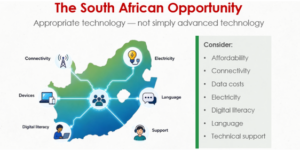
A South African map with visual icons representing Connectivity, Devices, Electricity, Language, Digital literacy and Support.

The Future of Assistive Technology in South African Distance Higher Education

By Dr Ashley Subbiah The future of inclusive higher education will not be determined simply by how much assistive technology is available. South Africa already has access to a growing range of technologies—including screen readers, refreshable Braille displays, optical character recognition, speech-to-text, captioning, magnification, accessible digital formats and increasingly sophisticated artificial intelligence. The more important question is whether these technologies enable students with disabilities to participate independently throughout their educational journey. Distance education has enormous…
Assistive Technology in the Modern Workplace

Assistive Technology in the Modern Workplace: From Reasonable Accommodation to Competitive Advantage

By Dr Ashley Subbiah The modern workplace is changing rapidly. Artificial intelligence, cloud computing, voice technologies, automation and increasingly sophisticated digital platforms are transforming how people work and how organisations access talent. Yet for many persons with disabilities, technology has always represented something more fundamental than productivity or convenience. It has represented access. For a person who is blind or visually impaired, the right Assistive Technology can be the difference between being dependent and being…
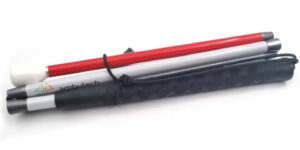
Ambutech Mobility Cane - closed

Beyond the White Cane: Why South Africa’s Future of Independence Depends on Orientation and Mobility, Rehabilitation and Assistive Technology

By Dr Ashley Subbiah The global conversation around disability and accessibility is changing rapidly. Artificial intelligence can now describe images, summarise documents and assist with navigation. Smart glasses can identify objects and provide environmental information. Refreshable braille displays connect seamlessly to smartphones and computers. Mainstream mobile devices increasingly include accessibility features that were once available only through specialised assistive technologies. These developments are transforming opportunities for blind and partially sighted persons worldwide. Yet amid the…